Meet Global Partners of ECRA: Tamás Dudlák on the Middle East, Energy Security, China and His career as a Hungarian Scholar in International Studies

This interview is conducted under the special rubric “Meet Global Partners” of the Eurasian Continent Research Association. Mr. Yu Yan Daniel Wong, intern at the CECPSR, Armenia, and MPhil student at the University of Oxford, interviews our distinguished and dedicated member, Dr. Tamás Dudlák, University of Pécs, Hungary.
1. What motivated you to research China’s role on the Eurasian Continent and issues of energy security?
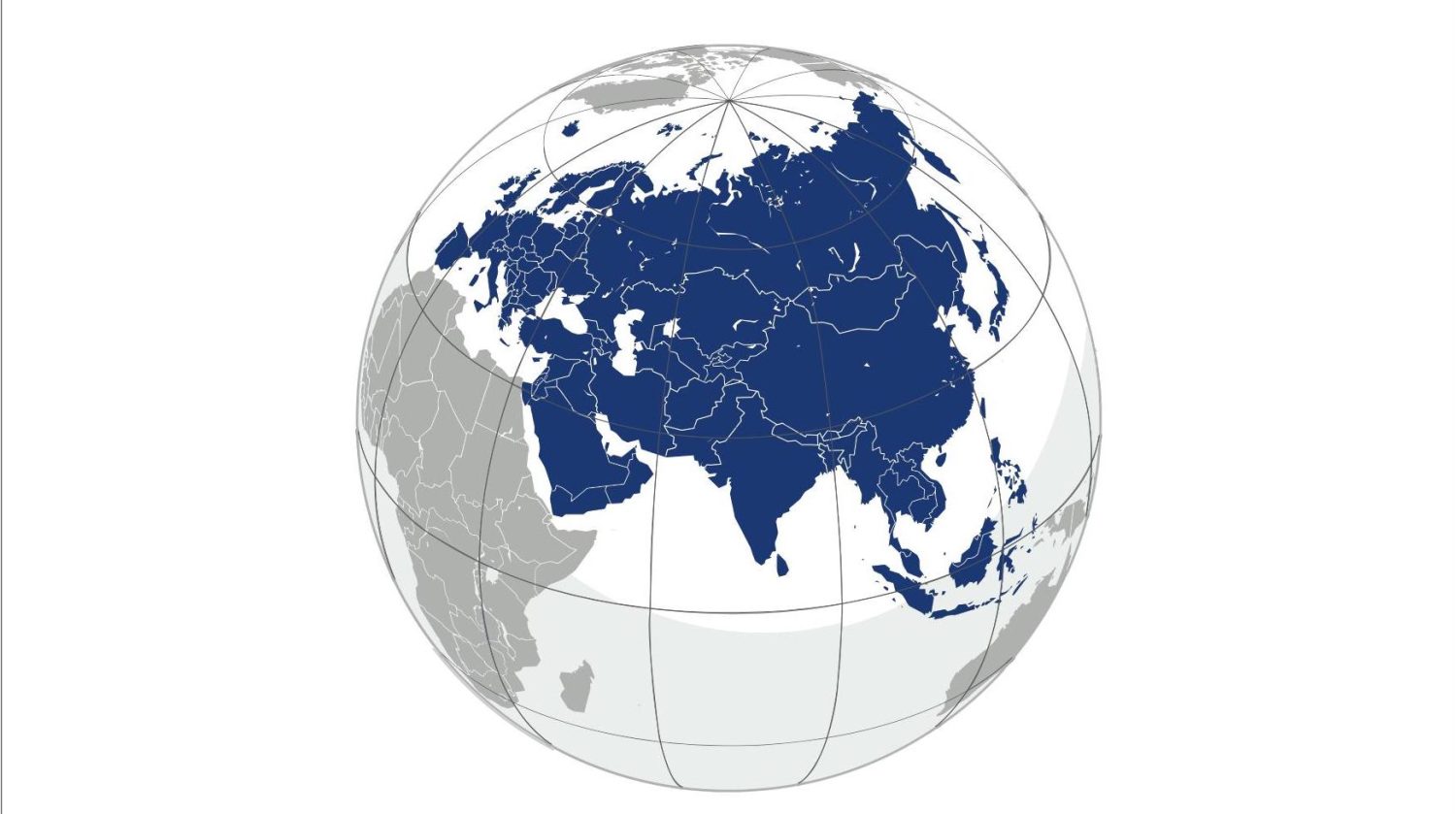
First of all, thank you for the interview opportunity. To be honest, I would not consider myself a scholar on Chinese issues; however, during my research on the contemporary Middle East and Central Asia, I encountered the rising importance of China. This led me to investigate the transformative role that China’s various involvements play in these regions. China’s pivotal role is most evident in strategic areas such as energy policy, a field I have previously explored in the context of the Middle East, particularly Iran and Türkiye. In my view, one of the most consequential geo-economic processes shaping the Eurasian continent is the trend described by Kent E. Calder in his 2012 book The New Continentalism: Energy and Twenty-First-Century Eurasian Geopolitics. According to this trend, the eastern part of the continent is becoming increasingly—and by now even predominantly—reliant on energy resources and raw materials located in the continental hinterland and West Asia. This development has implications for the global economy, as East Asian population centres, rather than the Global West, have become the largest markets for the major suppliers of energy.

Tamás Dudlák chairs Panel 4: Middle East and Eurasian Corridors during the VI Eurasian Research Conference.2025
2. As an active and experienced participant of the Eurasian Research on Modern China and Eurasia Conference, what is your experience in this conference as a speaker and chair of panels, and why would you encourage others to join? What makes this conference unique among so many international conferences around the world?
Indeed, this annual conference in Yerevan has become an integral part of my academic calendar in recent years, and I am planning to attend it for the fourth time this December. Without exaggeration, I can say that, thanks to Mher Sahakyan and his dedicated team, Yerevan has become a major hub and institutional meeting point for scholars working on modern and contemporary Eurasian studies. The sense of inclusiveness and the spirit of cooperation that I have experienced in Yerevan are not always present at conferences in the West. Mher goes out of his way to involve everyone in the collective endeavour with the utmost openness and appreciation, supports his colleagues, and provides conference participants with a shared platform for academic publishing. One of the conference’s greatest strengths is the diversity of perspectives and scholarly approaches it brings together. Indeed, the conference serves as a forum where local perspectives take centre stage, beyond the Western viewpoints that tend to dominate the field. These perspectives are authentically represented by participants from countries with a wide range of research backgrounds. These are values that I personally hold in the highest regard, and, as a scholar, I believe that incorporating such local perspectives into our academic discourse contributes to the development and enrichment of our scholarly community. And, of course, we should not overlook the additional benefits of attending the conference: the opportunity to discover local culture, experience Armenian hospitality and gastronomy, and explore Yerevan itself, a truly great capital city.
3. What motivated you to join the Eurasian Continent Research Association (ECRA)? What advice would you offer to other scholars considering membership and what opportunities and benefits can they find through this association?
As the above suggests, ECRA is an organisation that brings together a dynamically developing scholarly community and holds particular significance for both my professional life and my career development to date. In the period following the completion of my PhD (2022), the annual conference organised in Yerevan, along with the publications emerging from each conference, has played a particularly important role in my academic career. For early-career scholars such as myself, these opportunities are especially valuable in terms of gaining international visibility. ECRA’s conferences and publications, together with its ever-expanding network, provide researchers working on Eurasia and beyond with an important channel through which to make their findings and locally grounded perspectives accessible to the wider academic community. Researchers joining ECRA can also draw on the extensive pool of knowledge and experience accumulated within this scholarly community. I believe that many of us can identify with the organisation’s ethos and its commitment to ideology-free, respectful academic research that encourages mutual understanding and peaceful relations to the benefit of all communities. Such principles are rather rare in the often highly politicised environment of political science and international studies. Beyond representing the values and spirit of the organisation, each member can also actively contribute to shaping the Association’s activities.

Tamás Dudlák delivers speech during the V Eurasian Research Conference. 2023.
4. Could you tell us about your career trajectory and experience as a Hungarian scholar actively engaged with international studies? In addition, what advice would you give to younger members of the ECRA regarding academic mobility and how international mobility can contribute to a scholar’s professional career?
I consider myself fortunate because, throughout my relatively short academic career so far, I have consistently enjoyed the freedom to choose my research topics and directions according to my own interests and curiosity, with the support of excellent teachers and colleagues. In this respect, I would first mention ELTE Eötvös Loránd University, where I completed both my undergraduate and master’s studies and subsequently had the opportunity to work as a researcher following my doctoral studies. Corvinus University of Budapest became a particularly important institution for me during my doctoral training, providing support that helped me take a significant step forward in my academic career. My current institution, the University of Pécs, likewise offers a supportive environment in which I enjoy academic freedom and access to outstanding mobility opportunities. A cornerstone of my academic life has been the numerous international conferences and workshops I have attended in almost every part of the world. I can confidently say that the Eurasian Research on Modern China and Eurasia Conference has become one of my favourite conferences. Nothing illustrates this better than the fact that, when I return to Yerevan this December, the ECRA conference will become the one I have attended more frequently than any other. I believe that participation in conferences and workshops is important for several reasons. Beyond networking, publication opportunities, and the chance to receive feedback, a good conference can also provide considerable research inspiration. For me, conferences are forums for intensive intellectual exchange, where fellow scholars shed light on the challenges facing our discipline, emerging research opportunities, contested issues, and the diversity of scholarly perspectives. The wealth of ideas shared at these events, whether consciously or unconsciously, invariably shapes our research interests. As for longer-term mobility, I encourage everyone working on a particular region or country to visit their chosen area of research whenever possible. The knowledge and impressions gained through such visits and fieldwork help embed our academic understanding in the realities of everyday life.
5. In your chapter, “Empowering the Dragon. Strategic Competition of China and Russia in the Central Asian Natural Gas Sector” published in Routledge Handbook of Chinese and Eurasian International Relations, you argue that China’s energy policy “presents Central Asian countries with diversification opportunities but also reduces their traditional dependence on Moscow for exports” (p.68). To what extent has this traditional dependence on Moscow merely been replaced by an equal reliance on Beijing?
Central Asian energy-exporting countries, particularly Kazakhstan and Turkmenistan, occupy a geographically challenging position, as their landlocked status significantly constrains their export options. In this respect, Kazakhstan is in a more favourable position thanks to the Caspian oil export route, developed in the 2000s and bypassing Russia, whereas until 2009 Turkmenistan had to rely exclusively on natural gas exports to Russia. However, China’s rise has enabled these countries to supplement, and partly replace, the traditional northwestern-oriented oil and gas transportation routes inherited from the Soviet era, with a system of eastward pipelines connecting Central Asia to China. The establishment of eastward connectivity in the region, actively supported by China, represents a tremendous transformation (and, to some extent, a return to historical patterns). These old-new connections extend beyond energy policy and are also evident in the development of road networks, railway infrastructure, and digital connectivity. Moreover, the dominance of the Chinese energy corridor has been significantly reinforced by the European sanctions imposed on Russia following its invasion of Ukraine. One of the main conclusions of my study is that China’s growing presence in Central Asian energy affairs since the 2000s has brought about regionally transformative changes, even though the pipelines constructed to date supply only a fraction of China’s total energy consumption.

6. In describing the role of China and Russia in the Central Asian energy sector in your book chapter published in the Routledge Handbook of Chinese and Eurasian International Relations, you state that “China and Russia are both competing and interested in cooperation” (p.70). Are competition and cooperation complementary strategies for both China and Russia, and is this emblematic of their economic strategy in Central Asia?
Absolutely, and this leads to the broader debate about how states organise their international relations in the context of Multipolar World Order 2.0. I believe it is legitimate to speak of “coopetition” between Russia and China in Central Asia. Of course, when looking exclusively at the region, China currently has greater economic leverage to shape Central Asian dynamics than Russia. In other areas, however—such as culture, societal ties, security, politics and diplomacy—its room for manoeuvre remains more limited. Building influence and establishing trust in these domains is inherently a more gradual and time-consuming process. At the same time, as a global power, China must also take into account developments beyond the region, including its ongoing tensions with the United States. For this reason, China currently needs to remain mindful of Russia’s interests in Central Asia in order to avoid alienating Moscow. This is not only true of China–Russia relations but also applies to bilateral relations more broadly. In practice, relations between states nowadays are rarely characterised by clear-cut divisions or exclusivity. Rather, interactions between international actors are shaped by a complex web of interests, within which parties can pragmatically compartmentalise their bilateral relations, meaning that they cooperate in certain areas, while simultaneously acting as competitors in others. This complexity of contemporary international relations presents a particularly interesting challenge for both researchers and policymakers.
7. As you authored “Geopolitics and Sanctions: the Energy Partnership of Iran and China,” published in the Routledge Handbook of China’s Belt and Road Initiative in Eurasia, I would like to ask how the military conflict between Iran and the U.S.-Israel alliance has affected China’s imports of energy resources from Iran and other Persian Gulf states?
Iran primarily exports crude oil and petroleum products to China, as it lacks the export infrastructure (terminals) necessary for liquefied natural gas shipments. In this latter regard, China relies primarily on Qatar among the Gulf countries. It appears that, as was the case before the war, China has remained the largest market for Iranian crude oil and petroleum product exports in 2026. However, due to the effectiveness of the naval blockade imposed by the United States, Iran’s ability to export crude oil fluctuated considerably during the months of the war, with exports effectively falling to zero in September. After Iran, China has arguably been the greatest loser as a result of this uncertainty, having previously been able to purchase Iranian oil—already subject to sanctions—at discounted prices by circumventing the sanctions through various means. As for the other Gulf countries, uncertainty surrounding production capacity due to the war, as well as concerns about the navigability of the Strait of Hormuz, have significantly reduced exports to China. Beijing has sought to offset these disruptions partly by releasing substantial volumes from its own strategic reserves and partly by curbing domestic consumption. Nevertheless, China is also attempting to replace crude oil and natural gas imports from its traditional Middle Eastern suppliers with alternative sources, such as Russia, thereby contributing to upward pressure on global market prices. While Saudi Arabia, the United Arab Emirates and Oman have the option of transporting oil (at least partly) via routes that bypass the Strait of Hormuz, such alternatives are not available to Kuwait, Qatar and Iraq. Iranian attacks, for instance, have resulted in the loss of one-fifth of Qatar’s natural gas production capacity for several years. Iran’s attacks on oil and gas production infrastructure across the Gulf therefore also undermine Chinese interests. Consequently, we can expect continued Chinese diplomatic pressure on Tehran to prevent further attacks of this kind.
