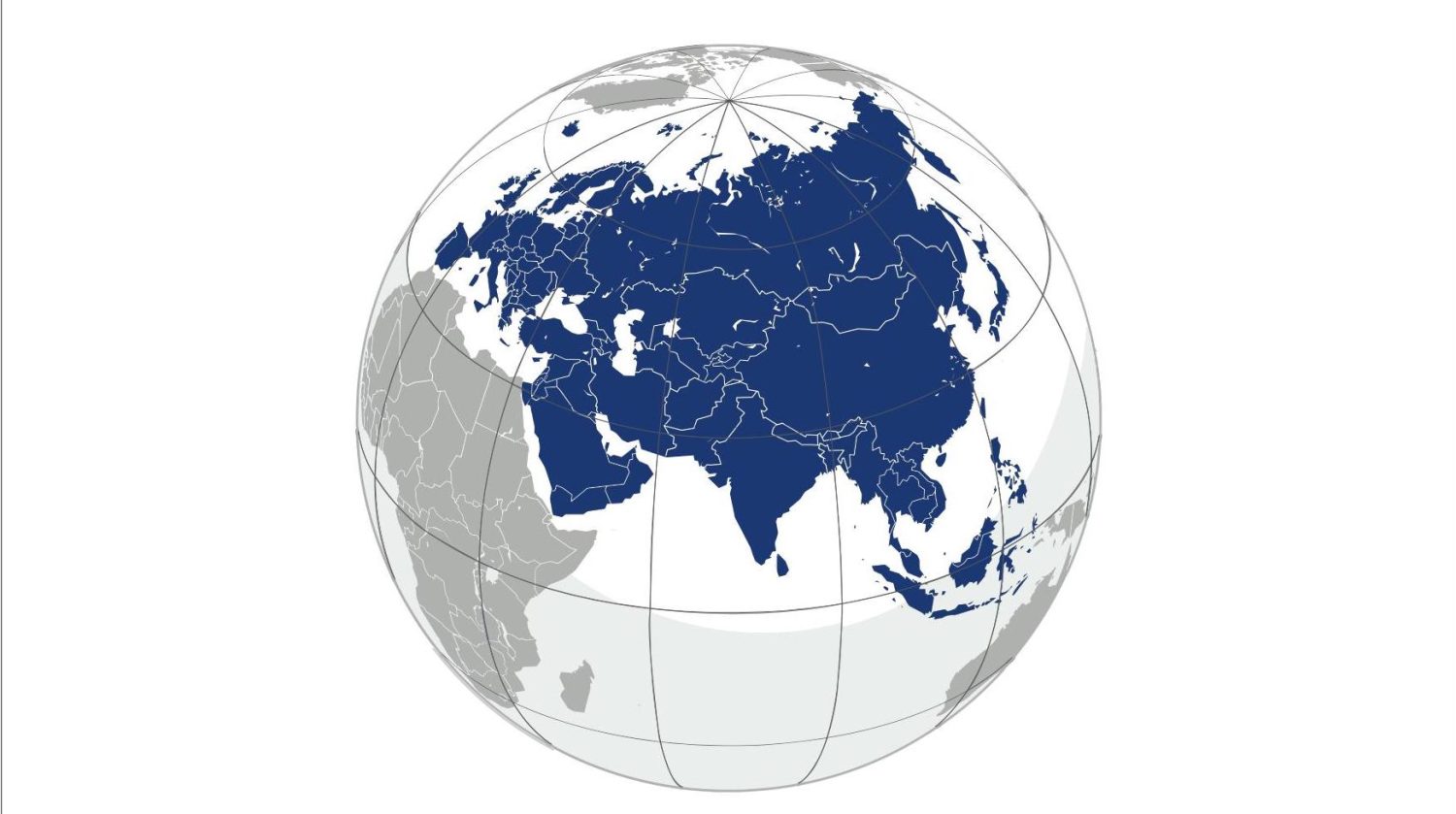
6th International Conference on China and the United States in Central Asia, the Middle East, Africa, and South Asia

May 16-17, 2026
Turan University
Almaty, Kazakhstan
Conference Committee
- Professor Dina Razakova, Vice-Rector, Turan University, Kazakhstan
- Professor GUO Changgang, Shanghai Academy of Social Science, China
- https://mei.edu/person/guo-changgang/
- Professor Artyom Lukin, Far Eastern Federal University, Russia https://eastasiaforum.org/author/artyom-lukin/
- Associate Professor Yang Chen, Shanghai University, China
- Associate Professor Nurbolat Nyshanbayev, Turan University, Kazakhstan
- Jaymie Durnan
- https://www.andrewwmarshallfoundation.org/team/jaymie-a-durnan/
- Professor Mbaye Bashir Lo, Duke University, USA https://middleeaststudies.duke.edu/profile/mbaye-lo/
- Professor Ablet Kamalov, Turan University, Kazakhstan
- Professor Wang Wen, Renmin University of China http://rdcy.ruc.edu.cn/yw/Teacher_Home/WangWen/Commentariesww/index.htm
- Associate Professor Mher D. Sahakyan, “China‑Eurasia” Council for Political and Strategic Research in Armenia https://chinastan.org/
- Professor Driss Bouyahya, Moulay Ismail University, Meknes-Morocco https://www.eujournal.org/files/journals/1/pictures/editorial/editors/193.html
- Professor Niu Xinchun, Ningxia University, China https://www.chinausfocus.com/author/10115/niu-xinchun.html
- Professor Klaus W. Larres, UNC Chapel Hill
https://history.unc.edu/person/klaus-w-larres/ - Professor Mahesh Ranjan Debata, Jawaharlal Nehru University, India. https://www.jnu.ac.in/content/mdebata
- Professor Mojtaba Mahdavi, the University of Alberta, Canada https://apps.ualberta.ca/directory/person/mahdavia
- Professor Amitav Acharya, American University, USA https://www.american.edu/sis/faculty/aacharya.cfm
- Prof. Lloyd George Adu Amoah, he University of Ghana, Ghana https://pscience.ug.edu.gh/staff/prof-lloyd-george-adu-amoah
- Edward Lemon, The Daniel Morgan Graduate School of National Security (DMGS), USA https://danielmorgangraduateschool.com/
- Professor Larry Catá Backer, Penn State University, USA https://dickinsonlaw.psu.edu/directory/larry-cat%C3%A1-backer
- Zeno Leoni, Department King’s College London, UK https://www.kcl.ac.uk/people/leoni-dr-zeno
About the Conference
China, the United States, and the Future of the Global South: Competing Visions, Converging Interests
China’s expanding presence across Central Asia, the Middle East, Africa, and South Asia is reshaping the political, economic, and security landscapes of the twenty-first century. Through initiatives such as the Belt and Road Initiative (BRI), China has invested heavily in infrastructure, trade, and development partnerships that have redefined connectivity between Asia, Europe, and Africa. At the same time, the United States continues to play a decisive role in these same regions through its network of alliances, defense cooperation, development aid, and strategic competition with Beijing. While some analysts frame these developments as part of a “new Cold War,” others view them as opportunities for renewed dialogue, cooperation, and inclusive growth across the Global South.
This conference seeks to move beyond binary narratives of rivalry and dominance. Instead, it will explore the intersections, overlaps, and tensions between Chinese and American strategies and the ways in which regional actors exercise their own agency in navigating these global transformations. From the energy corridors of Central Asia to the maritime routes of the Indian Ocean, and from technological innovation in the Gulf to political realignments in Africa, these dynamics reveal a world increasingly defined by multipolar interdependence rather than simple polarization.
Participants will examine the strategic, economic, and normative dimensions of global engagement. Key themes include infrastructure and connectivity, digital and green transitions, regional security architectures, development financing, and soft power. The goal is not merely to assess competition but to highlight spaces of cooperation and mutual learning that can contribute to sustainable and equitable development across the Global South.
The conference aims to bring together a diverse community of scholars, policymakers, and graduate students from different world regions and disciplines — including international relations, political economy, sociology, area studies, and security studies. Through panels, roundtables, and keynote discussions, participants will engage in evidence-based dialogue on both global strategies and local realities. Particular attention will be given to how states and societies in Central Asia, the Middle East, Africa, and South Asia interpret and respond to the evolving U.S.–China dynamic, crafting hybrid policies that reflect their own national priorities, identities, and developmental aspirations.
Rather than portraying the Global South as a passive arena of great-power competition, the conference emphasizes its active and strategic role in shaping the future of global order. Regional actors — from Kazakhstan and Saudi Arabia to Ethiopia and Indonesia — are increasingly defining new models of partnership that balance external ties with internal modernization. These emerging approaches challenge traditional hierarchies of global governance and call for rethinking development paradigms in light of local agency and regional innovation.
Ultimately, this event offers a platform for constructive, pluralistic, and forward-looking discussion on the evolving relationship between China, the United States, and the Global South. It encourages participants to envision a more inclusive global dialogue — one grounded in respect for diversity, sensitivity to context, and shared responsibility for peace and development. By bridging academic research with policy engagement, the conference aspires to generate fresh insights into how cooperation, competition, and co-evolution can coexist in an increasingly interconnected world.
Suggested Themes
We welcome individual papers, panels, and round table proposals addressing (but not limited to) the following:
Central Asia
- China’s BRI and U.S. strategic responses
- Competing security architectures: SCO vs. U.S. regional security initiatives
- U.S.–China energy diplomacy and infrastructure rivalry
- Central Asian agency in balancing Washington and Beijing
Middle East
- Energy politics: U.S. and China in the Gulf
- Great power approaches to the Israel–Palestine conflict
- Technology, arms sales, and competing defense strategies
- Religion, soft power, and legitimacy narratives
Africa
- U.S. aid and private investment vs. Chinese infrastructure finance
- Digital Silk Road and U.S. tech-security competition
- Debt, sovereignty, and African agency
- Education, soft power, and development strategies
South Asia
- Sino–Indian rivalry and U.S.–India strategic alignment
- Pakistan between CPEC and U.S. security ties
- Maritime politics in the Indian Ocean: ports, bases, and naval strategies
- Smaller states (Sri Lanka, Bangladesh, Nepal) navigating rivalry
Cross-Regional Perspectives
- Comparative studies of U.S. and Chinese engagements in the Global South
- Global governance and multipolarity
- Domestic drivers: Xinjiang, U.S. domestic politics, and global perceptions
- The role of Russia, Turkey, the EU, and Gulf states in shaping U.S.–China dynamics
Key Information
- Dates: May 16-17, 2026
- Venue: Turan University, Almaty, Kazakhstan
- Languages: English (with selected panels possibly in Russian/Kazakh/Chinese)
- Format: In-person, with limited hybrid participation for international presenters
Proposal Submission
- Abstracts: 250–300 words (with title, author affiliation, and contact details)
- Panel Proposals: 3–4 paper abstracts with a panel chair/discussant
- Deadline: March 30, 2026
- Full Papers Due: April 20, 2026
- Submission to: k.tugrul@turan-edu.kz
Publication Opportunities
Selected conference papers will be reviewed, edited, and published as an edited volume in the Routledge Research in Eurasian Geopolitics Book Series.
Organizers
- Turan University, Almaty
- In cooperation with international partners and research networks on China, the United States, and the Global South
In cooperation with international partners:
- Chongyang Institute for Financial Studies (RDCY), Renmin University of China, China
- “China-Eurasia” Council for Political and Strategic Research, Armenia
- Arab and Islamic Studies at Ningxia University, China
- Institute of Global Studies, Shanghai University, China
- Central Asian Studies, Jawaharlal Nehru University, India
- Moulay Ismail University, Morocco
- International Relations at Far Eastern Federal University (FEFU), Russia
- [Additional partners to be confirmed]
Information About Almaty
· Almaty, KAZAKHSTAN · https://www.youtube.com/watch?v=YYeyfs7rJOU
· Almaty City In Kazakhstan https://www.youtube.com/watch?v=WHrDLbCjH0A
· The Khorgos International Centre for Boundary Cooperation (ICBC) Kazakhstan-China Border https://khorgos.kz/glavnaya/about-the-center/?lang=en
· Turan University
https://www.youtube.com/watch?v=3YNl8XhoMXs or https://www.youtube.com/watch?v=9NRqlgF4GQ0
Leave a Reply