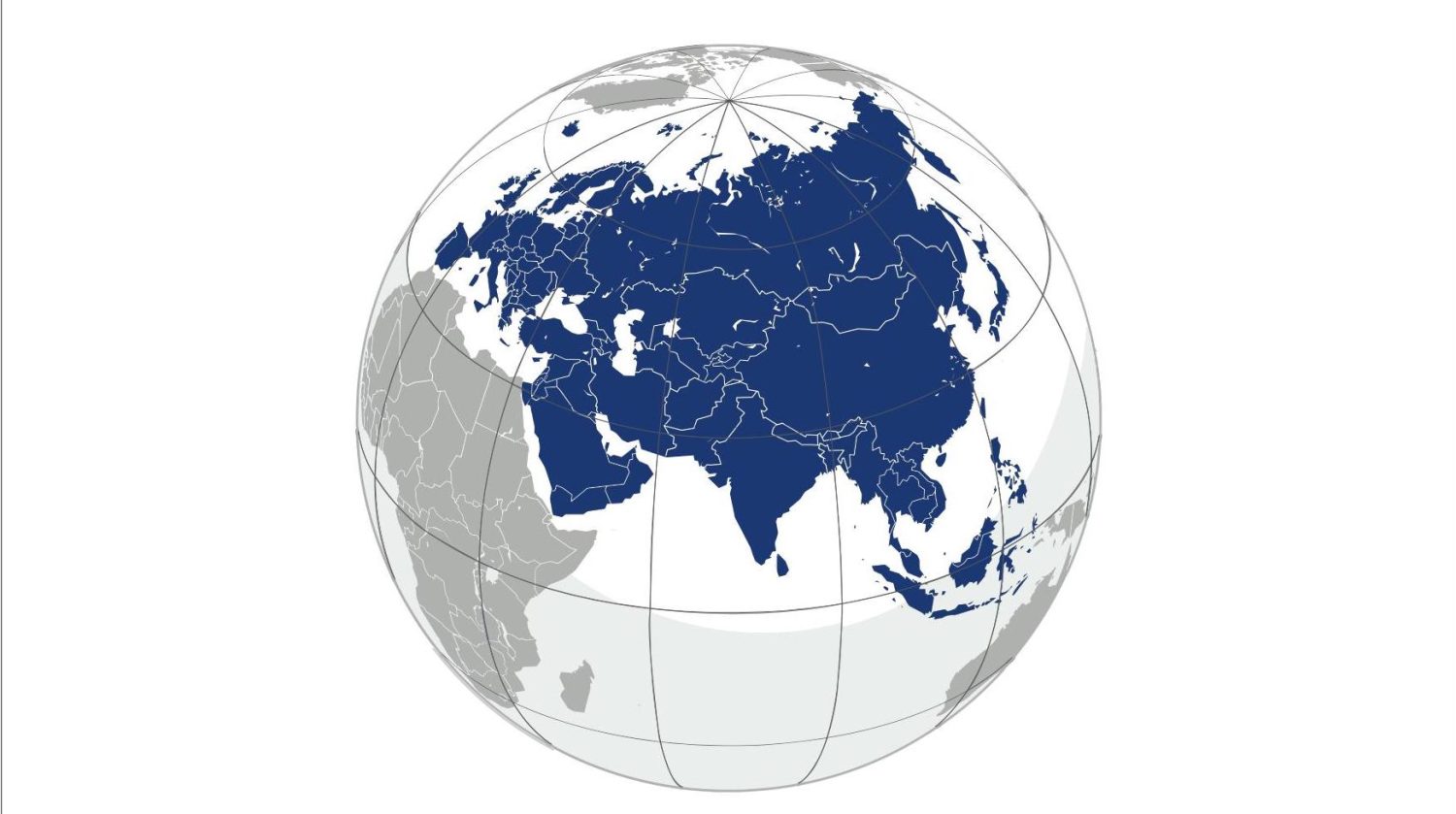
Forthcoming: Routledge Handbook of China’s Belt and Road Initiative in Eurasia

Edited By Mher D. Sahakyan, Kevin Lo
Description
Table of Contents
PART I
1. Introduction of the Belt and Road Initiative in the Eurasian Continent
MHER D. SAHAKYAN and KEVIN LO
PART II
Silk Road Economic Belt
2.Rebuilding Eurasian Interconnectivity: China-Central Asia-West Asia Economic Corridor
MHER D. SAHAKYAN
3. Evolution of the China-Mongolia-Russia Economic Corridor: Weighing functionality and rhetoric
CONNOR JUDGE
4. Explaining the Belt and Road Initiative: A Case Study of the New Eurasian Land Bridge Economic Corridor
CHRIS B. WENSINK
5. Understanding Bangladesh–China–India–Myanmar Economic Corridor in the Era of Multipolar World Order 2.0: Perspectives from Bangladesh
SHANJIDA SHAHAB UDDIN and RAIAN HOSSAIN
6. The China-Pakistan Economic Corridor in Multipolar World Order 2.0: Perspectives from India
JOSEPH MOSES
7. China-Indochina Peninsula Economic Corridor and Lancang-Mekong Sub-Regional Cooperation in the Era of Multipolar World Order 2.0
JINRUI LIU
PART III
Digital and Space Silk Roads
8. The security dimension of the Digital Silk Road: from Netpolitik to Digitalpolitik
PAULO AFONSO B. DUARTE, ANTÓNIO TAVARES, NASIM MOSAVI and FERNARDO PAULO LOPES AMORIM
9.Sino-Russian Cybersecurity Cooperation in a Multipolar World Order: Implications for the Digital Silk Road
GRACE X. YANG
10. China’s Starry Constellations with Russia and the Global South: The Space Silk Road Analysed
TIMNA MICHLMAYRand JAN ŽELEZNÝ
PART IV
Environmental Governance and Critical Raw Materials
11. The Environmental Governance of China’s Belt and Road Initiative
KEVIN LO
12. Belt and Road Initiative’s impact on Critical Raw Materials in Eurasia: The case of the EU
GINA PANAGOPOULOU
PART V
Geopolitical Dynamics
13.Unpacking Chinese Communication about the Belt and Road Initiative: Moral Realist Project in a World Order 2.0
ÉRIC POMÈS AND MATTHIEU GRANDPIERRON
14. China’s Belt and Road Initiative and the US Indo-Pacific Strategy: A Qualitative Comparative Analysis
CHAOTING CHENG
15. From Obama to Biden: The United States Position on BRI under the “China Threat” Narrative
CHANG LIU and JIATE WANG
PART VI
Central Asia and the Russian Far East
16. Multipolarity, the Rise of China, and Kazakhstan’s Emergence as a Middle Power
JESSICA NEAFIE
17. The Belt and Road Initiative in Central Asia: Opportunities and Challenges for Kyrgyzstan and Tajikistan
JILDIZ NICHARAPOVA
18. India and China in Central Asia: Neither Rivalry nor Collaboration
MAHESH RANJAN DEBATA
19. Social Innovation Projects in Belt and Road Initiative Countries: Case Studies of Uzbekistan and China
BAKHROM RADJABOV
20. Chinese Investment in the Russian Far East: Problems and Prospects
OLGA ZALESSKAIA
PART VII
South Caucasus
21. Beyond the West-Russia Dichotomy: Case Studies on the Hedging Strategies of Armenia, Azerbaijan, and Georgia
MAXIMILIAN OHLE
22. The International North-South Transport Corridor and the Belt and Road Initiative in the South Caucasus
YEGHIA TASHJIAN
PART VIII
Middle East
23. The Belt and Road Initiative and China–GCC Relations: Strategic Partnerships in a Multipolar World Order 2.0
STEVEN WRIGHT
24. Prospects for New Infrastructure Cooperation between China and the Gulf Countries Under the Belt and Road Initiative
CHUNCHU ZHANG
25. Iran’s Look East Policy and the Energy Silk Road: The Energy Partnership of Iran and China
TAMAS DUDLAK
PART IX
Europe
26. Navigating the Silk Road in Central and Eastern Europe
ZDENĚK ROD, TOMÁŠ KOLOMAZNÍK, RICHARD STRAKA, AND MIROSLAV PLUNDRICH
27. Towards a Shared Future: Upgrade of Strategic Partnership between China and Serbia within the BRI framework
NENAD STEKIĆ
28. Rethinking Italy-China Cooperation in the Belt and Road Initiative: The Communication’s Impact in the Italian Case Study
GIORGIO CARIDI
PART X
Conclusion
29. Conclusion: A Research and Policy Agenda for the Belt and Road Initiative
KEVIN LO and MHER D. SAHAKYAN
Editors
Biography
Mher D. Sahakyan is a Fulbright Visiting Scholar at the School of Advanced International Studies of Johns Hopkins University. He is the founding director of the China‑Eurasia Council for Political and Strategic Research in Armenia. Mher was an AsiaGlobal Fellow at the Asia Global Institute of the University of Hong Kong (2020/21 and 2022). He was a 2024 LEWI Visiting Fellow at the David C. Lam Institute for East-West Studies at Hong Kong Baptist University. Mher holds a doctorate in international relations from China’s Nanjing University. He is the editor of Routledge Handbook of Chinese and Eurasian International Relations and China and Eurasian Powers in Multipolar World Order 2.0: Security, Diplomacy, Economy and Cybersecurity, which Routledge published in 2024 and 2023.
Kevin Lo is an Associate Professor and Chair of the Department of Geography and Acting Director of the David C. Lam Institute for East-West Studies of Hong Kong Baptist University. He has a PhD in Geography from the University of Melbourne. He is an Editor-in-Chief of the Journal of Asian Energy Studies, an international peer-reviewed journal dedicated to interdisciplinary research on all aspects of energy studies in Asia. He has won several major competitive grants from the Research Grants Council of Hong Kong and has published in many leading journals, including Global Environmental Change, Political Geography, Renewable and Sustainable Energy Reviews, Energy Policy, Energy for Sustainable Development, Environmental Science & Policy, Cities, Habitat International, and Journal of Rural Studies.

Leave a Reply